From first glance to your own grip.
PrimGrasp is an EEG-driven hand exoskeleton. It lets people start active hand therapy in the first months after a stroke, choosing every movement with their eyes.
The device
Meet the glove.
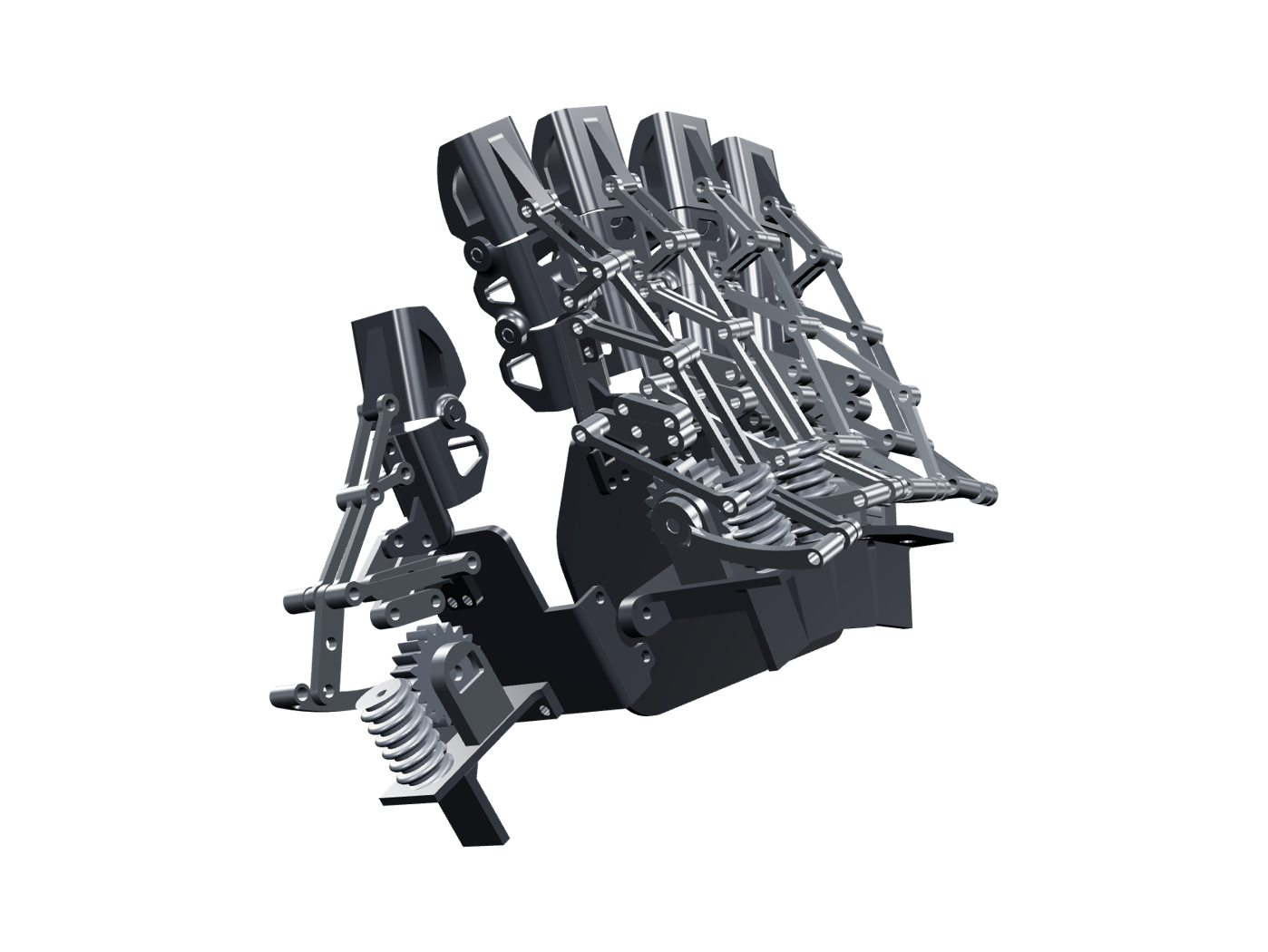
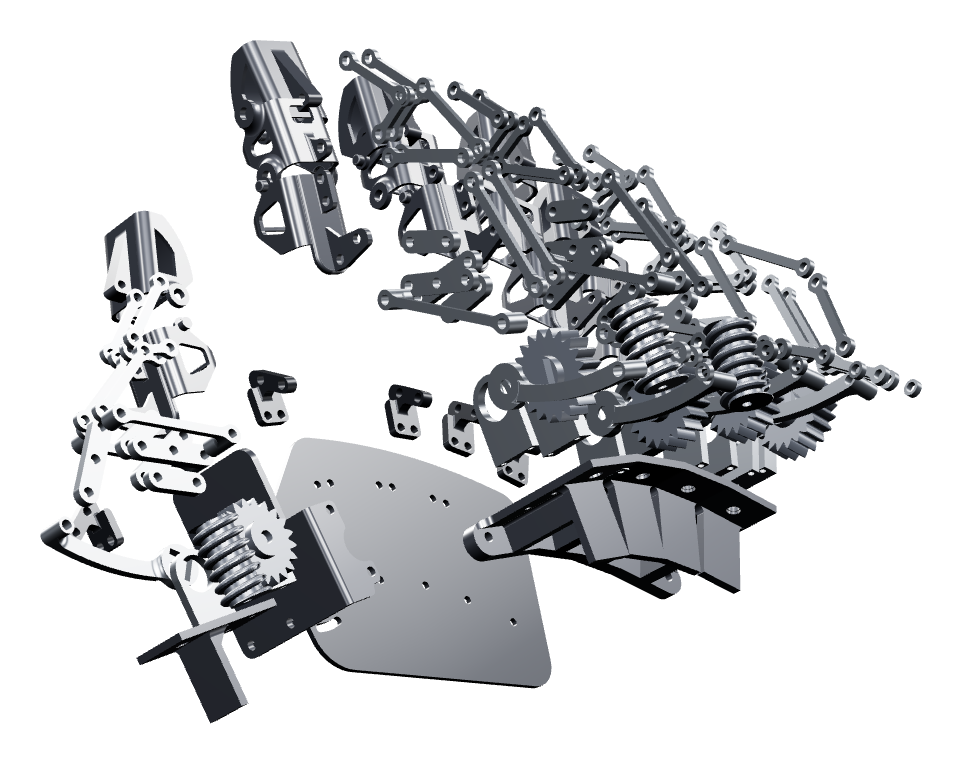
Five fingers, one intention. Scroll to take it apart.
parts, designed in-house
Modelled in Fusion 360, 3D-printed and assembled by our team.
geared motors
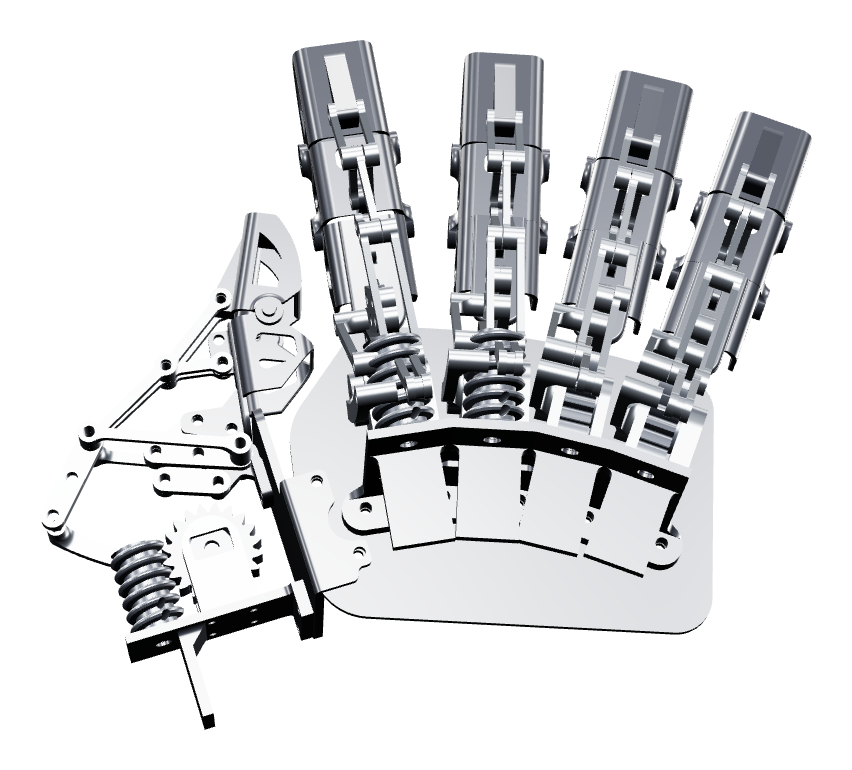
Worm-gear and linkage drives open and close each finger.
angle sensor per finger
Magnetic encoders stop every movement at a safe angle.
Real-time 3D of our actual Fusion 360 assembly
Our mission
Rehabilitation should start the moment a patient can look, not months later when the hand can move.
The first months after a stroke may be the best window to retrain a hand. But people with a severely paralyzed hand often have no usable muscle signal, and imagining a movement clearly enough for a computer takes training they can’t do yet. So most of that window goes to passive movement.
PrimGrasp needs only one thing the patient can still do: look. A headset reads which target they choose, and a five-finger exoskeleton moves their hand. Every repetition is one they chose.

The problem
Stroke is one of the leading causes of long-term disability.
The hand is often the last to recover, and the best window to retrain it closes quickly.
Each dot is one million strokes
new strokes worldwide every year.1 Many survivors leave hospital with a hand they can’t yet open or close.
new strokes leave severe arm and hand impairment.2
after a stroke may be the best window to retrain a hand.2
for a leading EMG-driven arm brace, which needs muscle signals many patients don’t have yet.2
muscle signal or motor-imagery training needed by PrimGrasp. Patients only need to look.
1. Feigin VL, et al. World Stroke Organization (WSO): Global Stroke Fact Sheet 2022. International Journal of Stroke 17(1), 18–29 (2022).
2. PrimGrasp market analysis, October 2026. Primary clinical citations will be added before launch.
What recovery means
Recovery is measured in small, ordinary moments.
Our goal is to let patients practise opening and closing their hand early, many times a day, so more of these moments come back.
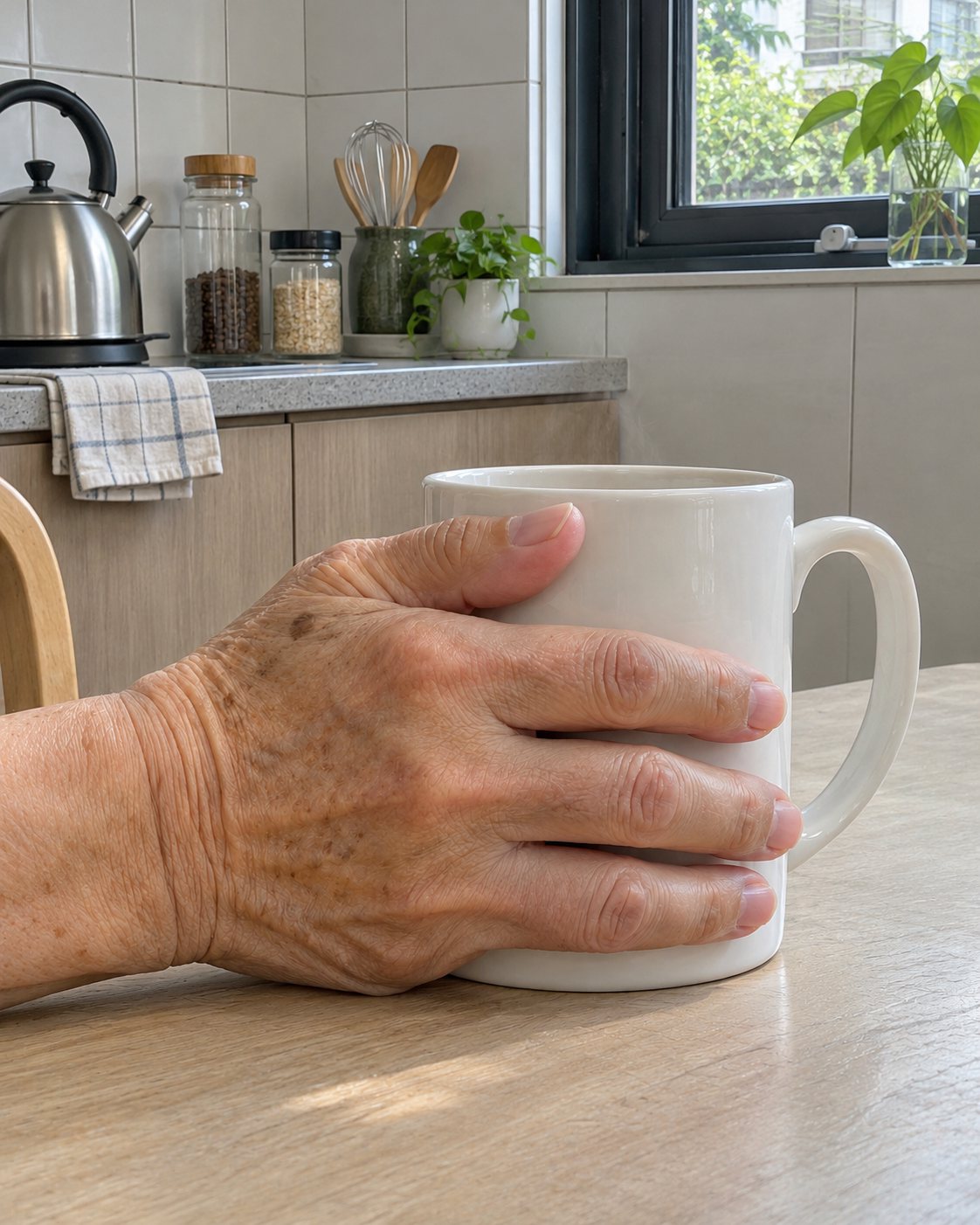
Holding a cup
Morning coffee, without help.
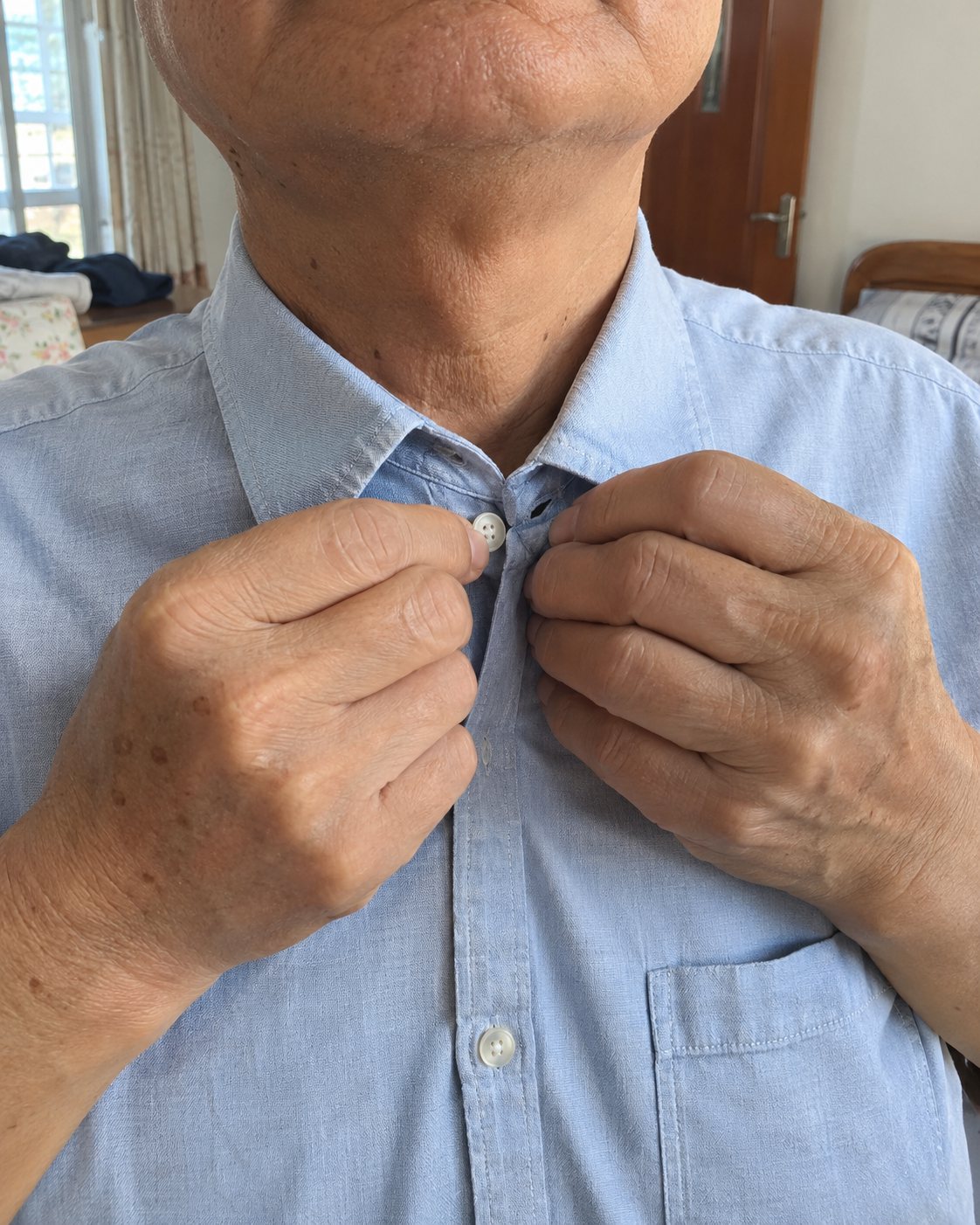
Getting dressed
A button, a zip, a sleeve.

Holding a hand
The grip that matters most.
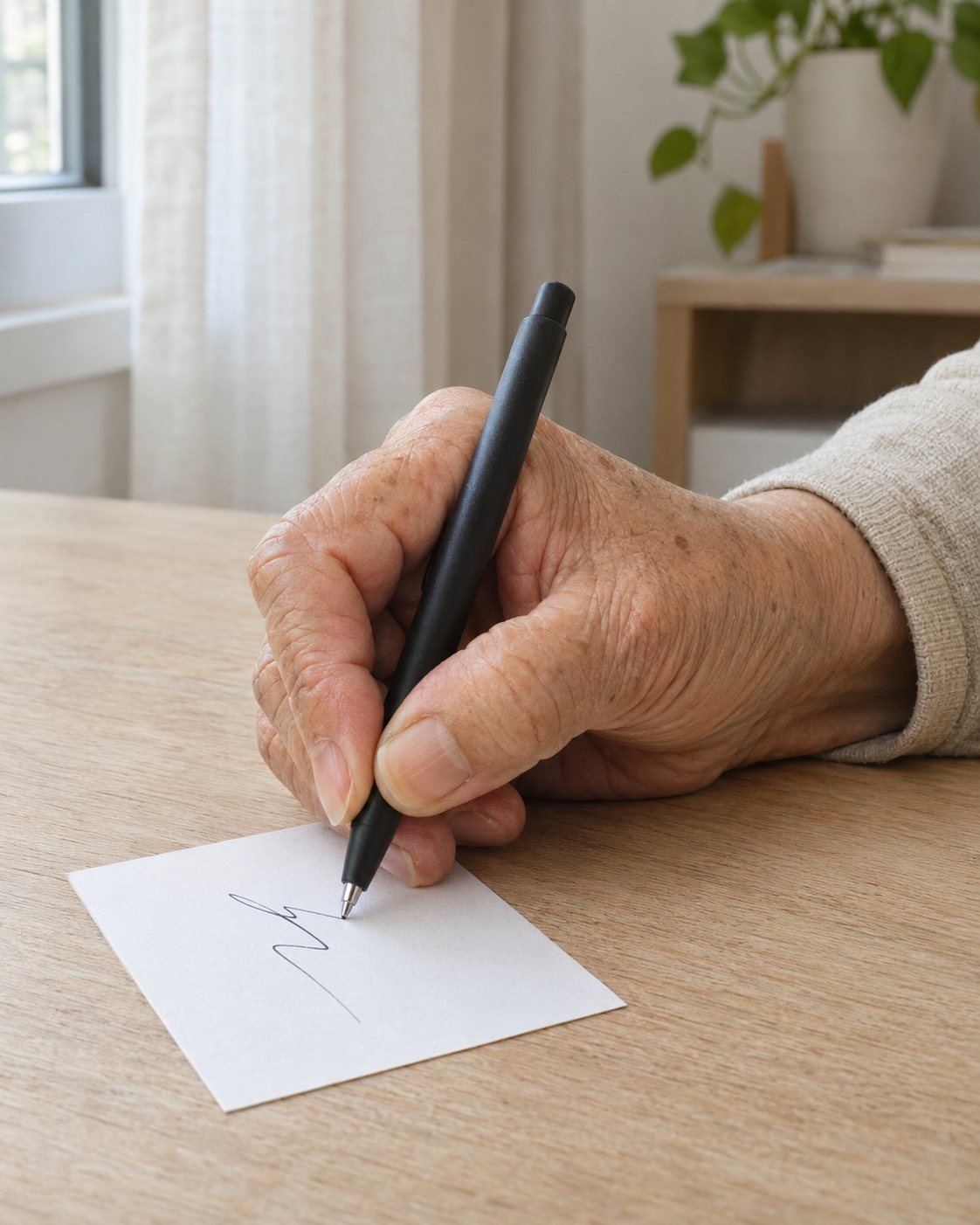
Writing a name
A signature, a note, a card.
How it works
Look. The brain echoes. The hand moves.
Look at a target.
Two targets pulse on a screen, each at its own rate: 10 Hz to close the hand, 15 Hz to open it. The patient simply looks at one.
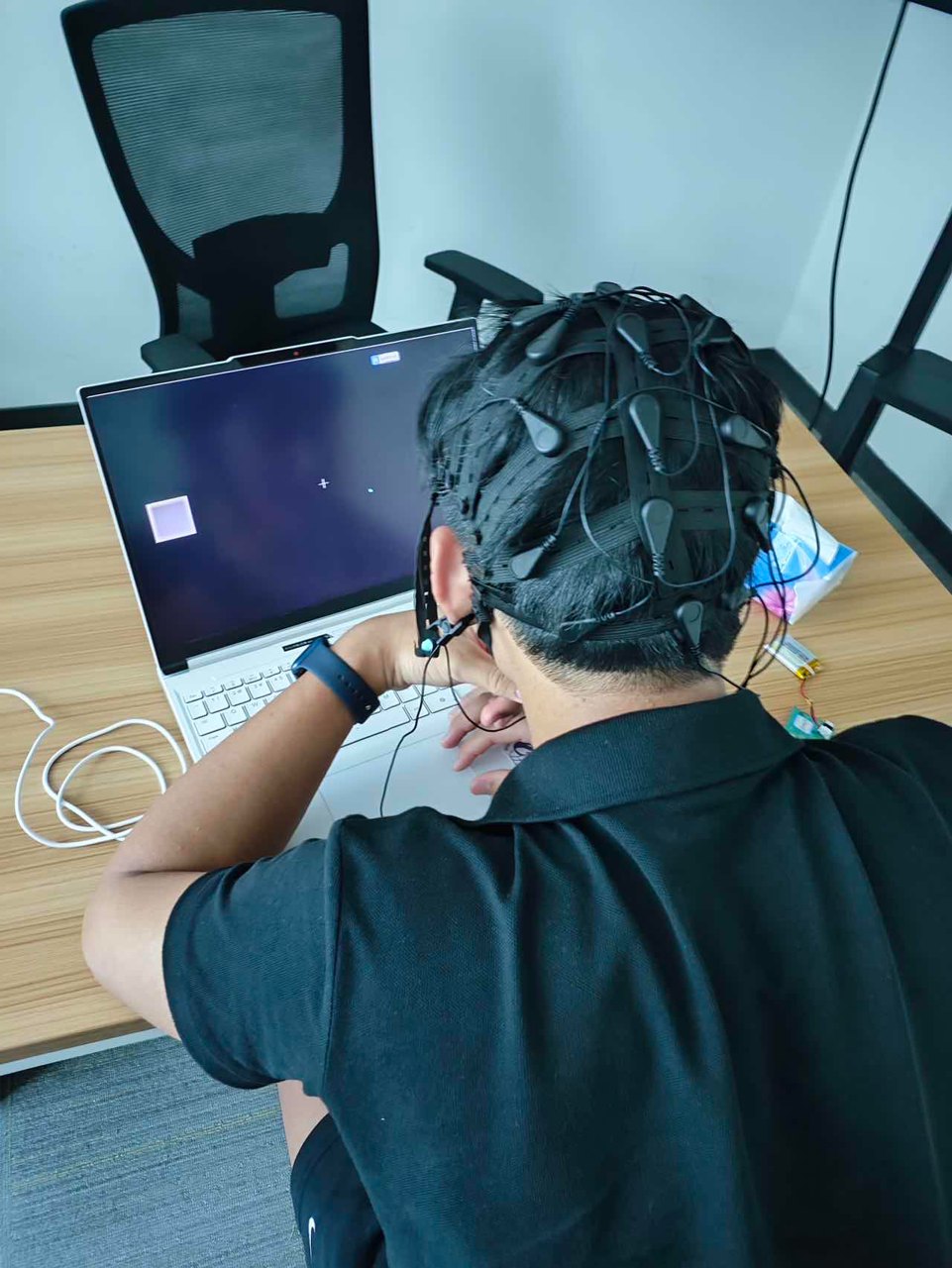
The headset hears the echo.
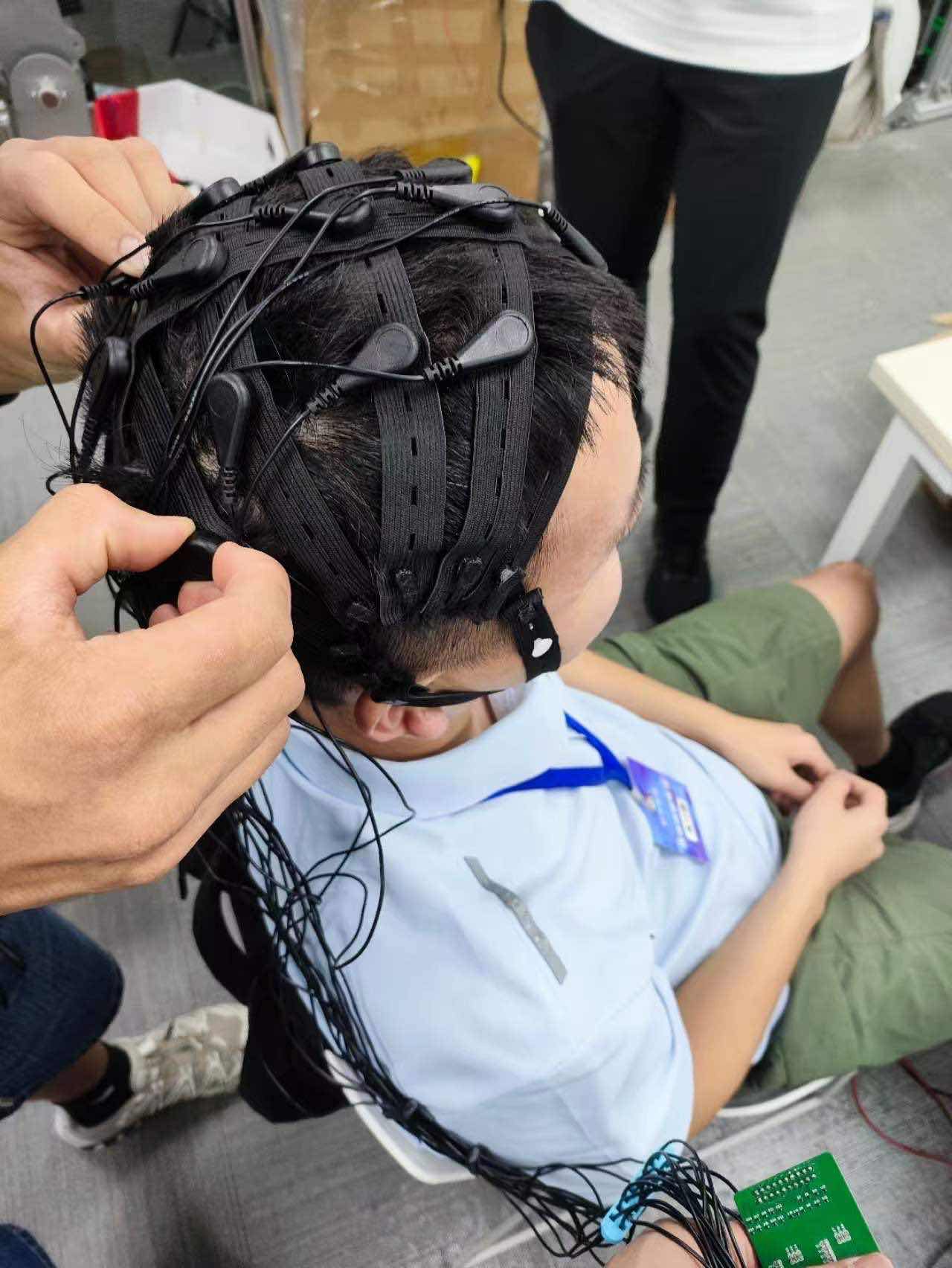
Sixteen dry electrodes record the visual cortex 250 times a second. A training-free decoder finds which rhythm the brain is echoing.
The glove moves the hand.
The choice becomes a command, close or open. Five motors move the fingers, and an angle sensor on each finger keeps every movement within safe limits.
Technology
Engineered from scratch, part by part.
The glove, its control electronics, the EEG recording pipeline and the decoder were built in parallel by one team.
Five fingers. Five geared motors.
Worm-gear and linkage drives open and close each finger, with return springs throughout.
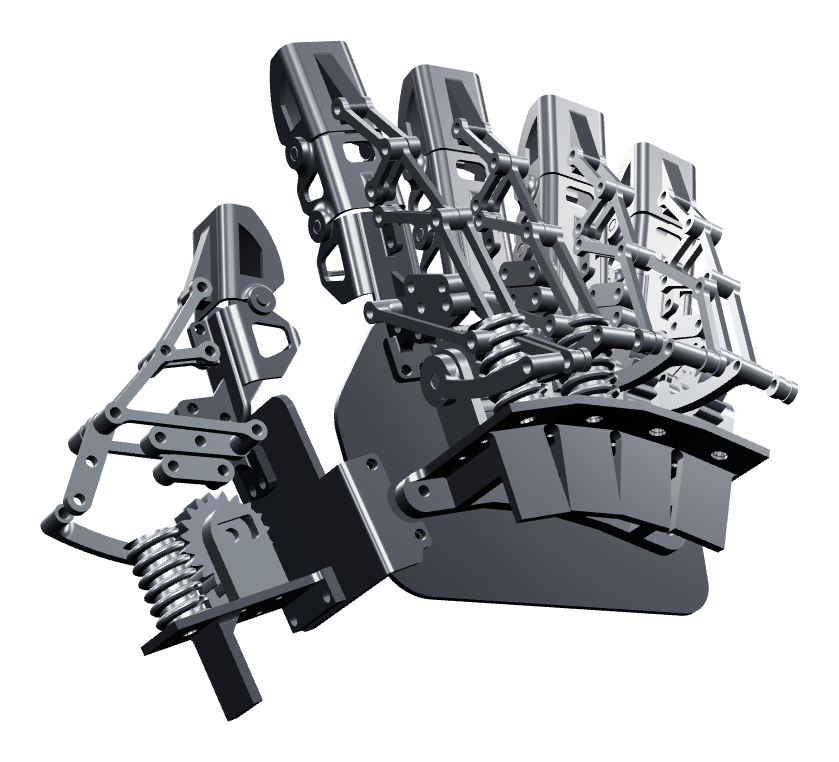
128 parts.
16 dry electrodes.
No training data needed.
Canonical correlation analysis finds the rhythm the brain is echoing.
An angle sensor on every finger.
Magnetic encoders report each finger’s angle, and the controller stops the motor at a safe limit.
Decoder
Training-free by default.
Our default decoder compares a few seconds of EEG with clean reference waves at each target’s rhythm. The best match wins. A new user can start without a calibration dataset.
A 10 Hz trial. Its 10 Hz score is partly the brain’s own alpha rhythm, so it overstates the real response. That’s why our next targets sit between 14 and 25 Hz.
Science
We publish what works, and what doesn’t yet.
Our decoder performs well on a published dataset. Live, on our own low-cost headset, it isn’t reliable yet. We traced why to four causes, and each one became a design rule.
Offline means recorded data scored afterwards. Live means decoded in real time while the user looks at the targets.
Clinical path
From a working prototype to the first patients.
We’ll only move to patients after ethics-approved testing with healthy volunteers, together with a hospital partner.
Prototype built
Glove, EEG headset and decoder built and tested by the team.
Reliable live control
New targets above the alpha band and per-session calibration, tested across five healthy users.
Healthy-volunteer study
Ethics-approved testing with a university hospital rehabilitation department.
First patient study
People with severe hand paralysis in the first months after stroke.
FAQ
Questions, answered plainly.
Can patients use PrimGrasp today?
Not yet. PrimGrasp is a research prototype. It has not been tested with patients and is not approved for clinical use. Our next step is an ethics-approved study with healthy volunteers.
Who is it designed for?
People in the first months after a stroke who have severe hand paralysis but can hold their gaze on a screen. People with epilepsy or photosensitivity are excluded, because the targets flicker.
Does it read my thoughts?
No. It detects one well-studied visual response: when you look at a target that flickers at a set rate, your visual cortex echoes that rate. The system only works out which of two targets you are looking at.
Why not use muscle signals or imagined movement?
Early after a stroke, many patients have no usable muscle signal, which EMG devices need. Systems that decode imagined movement need training that is hard to do in the first weeks. Looking at a target is something most patients can do from the start.
How accurate is it?
On a public research dataset, our decoder reaches 92–94% offline. Live, on our own dry-electrode headset, it scores 40–57% today, which is at chance for two targets. We’ve traced four causes and are working through them.
Is it safe?
Each finger’s motor stops at a safe angle measured by its own sensor, motor force is capped, and the worm gears hold the hand still if power is lost. Safety will be formally evaluated in an ethics-approved study.
What will it cost?
Our goal is a device hospitals can buy for US$2,800–5,600, compared with about US$54,600 for a leading EMG-driven brace. The prototype’s parts cost about US$560. These figures come from our October 2026 market analysis.
How can a hospital get involved?
We’re looking for a university hospital rehabilitation department with brain-signal research experience to host our first ethics-approved study.